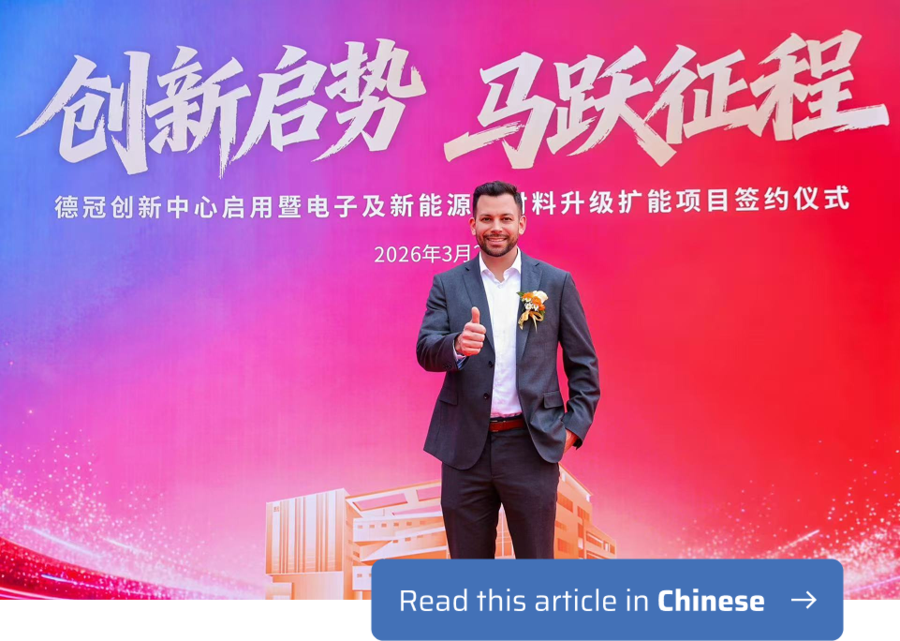
Between thoroughness and pragmatism: Patrick Zimmermann on sales, trust, and life in Shanghai
Patrick Zimmermann took a bold leap: he packed his bags, pulled up stakes in Germany with his wife, and now lives permanently in Shanghai. As Regional Sales Director for East Asia at Kampf Machinery Shanghai Co., Ltd., he is responsible for the markets in China, South Korea, Japan, and Taiwan. In this interview, he speaks about intercultural differences, the fascination of dynamic markets, and how German companies can learn from the speed at which business is conducted in China.
Mr. Zimmermann, you live and work in Shanghai. How did that come about, and what attracted you about living abroad?
I’ve been fascinated by other cultures and ways of working from an early age. After completing my apprenticeship as a precision mechanic, I deliberately looked for an environment that would give me the opportunity to “get out into the world.” At first, this involved shorter assignments abroad, and later I took on a sales role that involved extensive travel. When a generational change set in at Kampf and the sales position in China became vacant, that was the logical next step in my career.
I started at Kampf GmbH in 2021, right in the middle of the COVID-19 pandemic. At that time, I was based at the headquarters in Wiehl, worked my way through various departments, and was then sent to Asia in April 2022. Strategically, Shanghai is an ideal location for the company: many customers in the region can be reached within just a few hours, without major jet lag issues.
That's a big step—not just for you, but certainly for your family as well. Your wife is originally from South Korea; how did she feel about moving to China?
At first, she was definitely nervous, because despite their geographical proximity China and Korea are quite different. But now she feels very much at home in Shanghai, and that’s something that matters a lot to me, as well. A decision like this only really works out if both partners are on board. One shouldn’t underestimate that.
What surprised you in the early months?
To my surprise, finding an apartment was the hardest part. The whole procedure, expectations, and requirements simply work differently than in Germany. I had to change my mindset at first. On the positive side, I was really impressed by the pragmatism and the speed at which things get done. Issues are approached in a very solution-oriented way, with a clear focus on progress—often faster than we’re used to in our own work environment. That definitely has its own charm.
“On the positive side, I was really impressed by the pragmatism and the speed at which things get done. Issues are approached in a very solution-oriented way, with a clear focus on progress—often faster than we’re used to in our own work environment. That definitely has its own charm.”
Patrick Zimmermann
Have you also learned Chinese, and how does that help you in your daily life?
I took a language course of around 100 hours when I first started. To be honest, the language doesn’t come easy to me, but I can follow conversations with customers more easily nowadays—which is especially valuable when dealing with numbers, appointments, or price negotiations.
In everyday life in Shanghai, you can get by just fine with English, and in a professional setting, English is often the common language. My goal, however, is to continue improving my language skills.
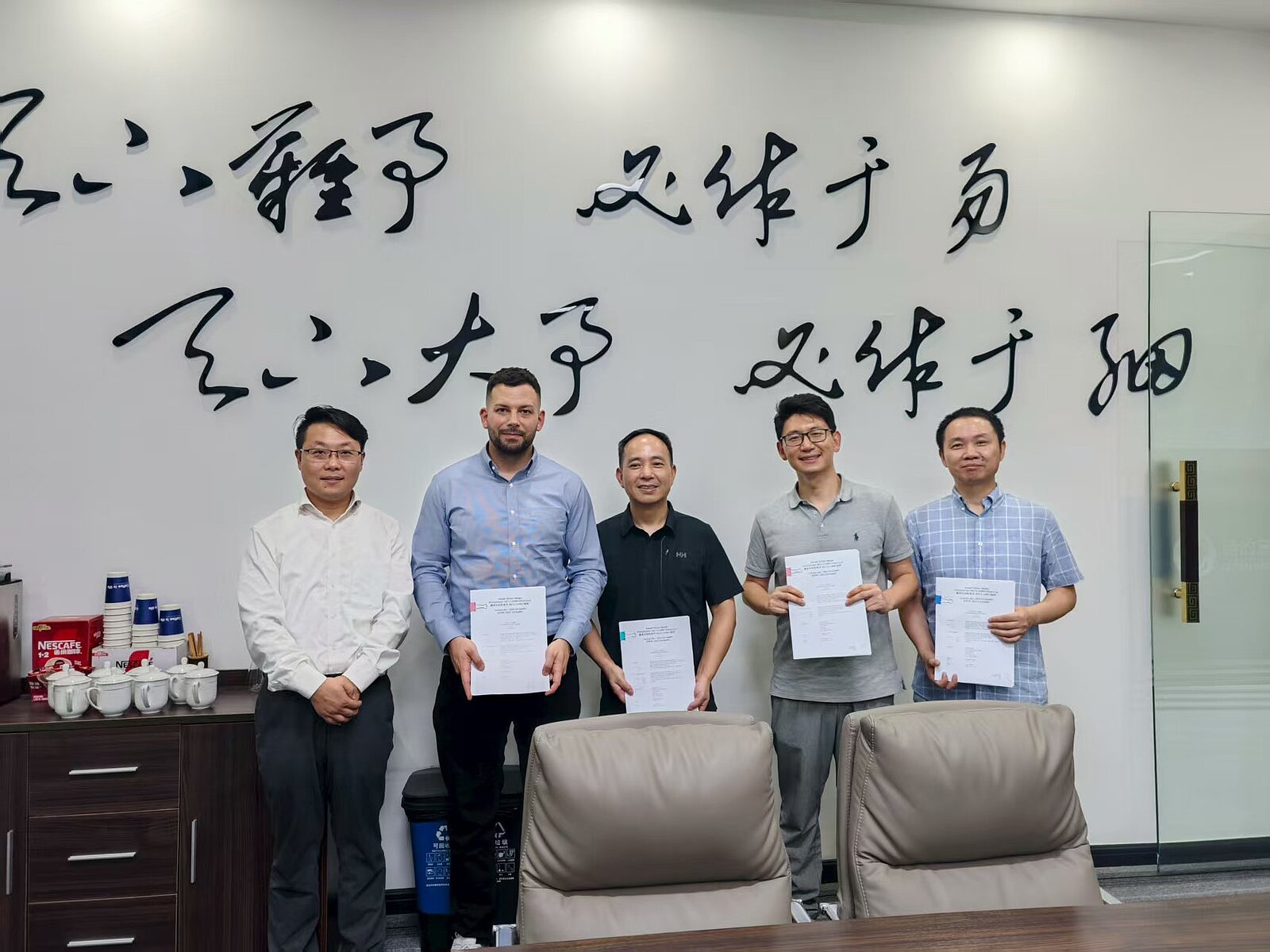
Over the years, you have surely noticed differences between the European and Asian markets. How is competition perceived in the Asian market, and what role does company size play in this regard?
Kampf enjoys a very good reputation in China, and the size of our company definitely works in our favor: We can quickly involve many specialists and departments; our sales team is closely integrated into the machine configuration process; and market feedback can be incorporated directly.
To some customers, we’re a major player; to international corporations with tens of thousands of employees, we’re a smaller-scale machine manufacturer. But we appear solid and competent—and that’s often more important than simply stating our size.
“To some customers, we’re a major player; to international corporations with tens of thousands of employees, we’re a smaller-scale machine manufacturer. But we appear solid and competent—and that’s often more important than simply stating our size.”
Patrick Zimmermann
Those are very interesting and, above all, significant differences that you’ve highlighted. How would you describe the cultural differences in business, Mr. Zimmermann? What do you need to know to be successful in China?
You need to learn to “read the room.” Here, a “yes” doesn’t automatically mean agreement, and a direct “no” is quickly seen as rude. People express themselves more indirectly and cautiously. Business relationships are often built over dinner together; trust and personal contact are central and essential. And even if a project doesn’t materialize, you keep the relationship open, because the next opportunity will come along. That’s an attitude I really appreciate.
How can German companies learn from Chinese organizational structures, and vice versa?
In Germany, we’re very process-oriented. We do a lot of research before we get started. That’s absolutely justified, especially when it comes to quality and reliability. In China, products are often brought to market much faster, with adjustments made later. Both approaches have their strengths. Often, however, the ideal solution lies somewhere in the middle.
This is exactly what mixed teams benefit from: they take the best of both worlds. “Made in Germany” remains a strong selling point when it comes to critical quality requirements. I see this every day in my interactions with customers.
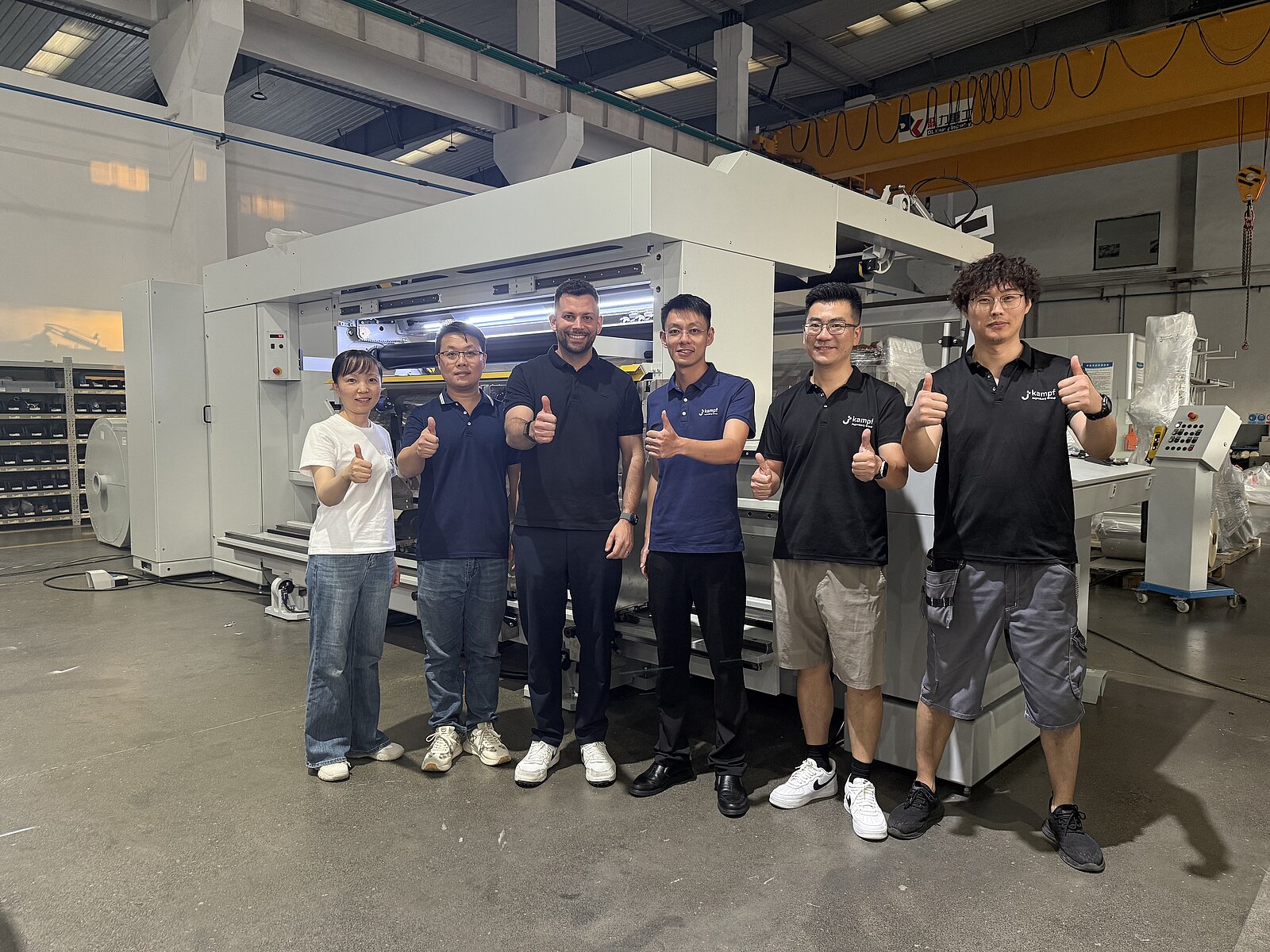
Which products and applications are particularly in demand in the Chinese market?
German quality remains a key selling point. We see Kampf performing particularly strong in high-performance applications for BOPP and BOPET packaging films, where production line output speeds are currently rising to as high as 700 m/min. The same applies to high-end applications—such as in the optical-grade BOPET sector with the highest-grade cleanroom environments—as well as inultra-thin films of less than 2 μm—for example, for battery applications.
Competition from local suppliers who are catching up technologically certainly is a reality in these areas. But Kampf is often able to maintain its position here through technology and quality. Very interesting dynamics are currently emerging locally, and we need to stay on top of them.
How do you assess the competitive situation in China in the long term?
The level of expertise and technological advancement among local providers is rising noticeably. In certain areas, Chinese competitors are clearly catching up. We must not—and should not—downplay this. At the same time, “Made in Germany” remains relevant for demanding quality standards. However, we must by no means rest on our achievements. We need continuous innovation, faster implementation capabilities, and further development in terms of user-friendliness and features. Topics such as AI are also playing an increasingly important role in this regard.
“In Germany, we’re very process-oriented. We do a lot of research before we get started. That’s absolutely justified, especially when it comes to quality and reliability. In China, products are often brought to market much faster, with adjustments made later. Both approaches have their strengths. Often, however, the ideal solution lies somewhere in the middle.“
Patrick Zimmermann
Last but not least, is there anything you’d like to share with young colleagues who are also considering gaining experience abroad?
I would encourage everyone to take the plunge. Working abroad offers a perspective you simply won’t gain in your local market. It challenges you, makes you more flexible, and is an experience that stays with you for a lifetime. Shanghai is constantly changing, and I’m glad to be right in the middle of it all.
Mr. Zimmermann, thank you very much for the honest conversation, and we wish you continued success—in Shanghai and beyond


